
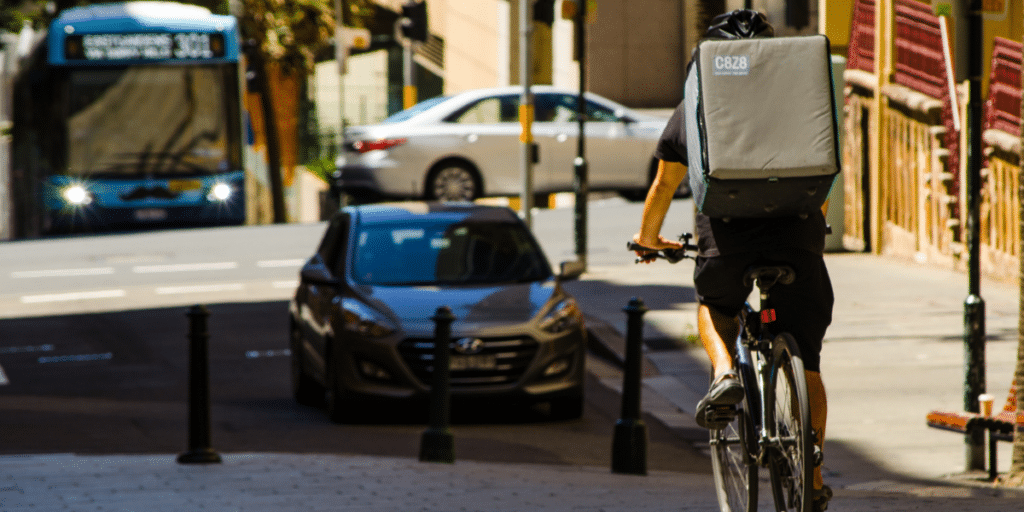
Data from food delivery riders is helping to shape sustainable transport options in New South Wales (NSW).
A UNSW-led research team, supported through an APPI Policy Challenge Grant, has identified clear opportunities for commercial data to contribute to NSW’s transport, road safety and environmental policies, including reducing emissions, improving safety, and supporting active transport objectives.
The report identifies a series of policy opportunities to improve infrastructure, strengthen data-sharing, and support inclusive policymaking, positioning NSW as a leader in safe, data-driven, and equitable urban mobility. The data was further used to pinpoint high-density areas, informing specific investments and guidelines to improve urban mobility pathways.
Through a unique data-sharing agreement between UberEats and UNSW, anonymised GPS trip data was analysed from delivery riders to inform urban transportation policy and planning. This quantitative data was complemented by video footage, rider interviews, and an expert workshop with representatives from governments and industry to outline key policy opportunities for policymakers.
Lead researcher Professor Amelia Thorpe said delivery riders offer a unique lens on urban mobility.
“Food delivery riders make frequent, short trips across diverse locations, giving us a detailed picture of how cycling fits into the broader road network. By using this data responsibly, policymakers can design safer infrastructure, improve efficiency for all road users and ultimately reduce emissions.”
APPI Head of Energy and Environment Policy Bonnie Bley said the project reflects the value of collaboration in addressing complex policy challenges. “This research shows how government, universities, and industry can work together to develop inclusive and data-driven approaches to urban mobility. Building better pathways for data-sharing will help NSW take a leadership role in creating safer, more sustainable transport systems.”
The study found that road infrastructure was the top safety concern among riders, who consistently called for separated bike lanes and clearer regulations. It also highlights the need for safeguards around privacy, digital security, ethical oversight, careful legal agreements and expert handling of geospatial data in order to ensure the responsible use of such approaches.