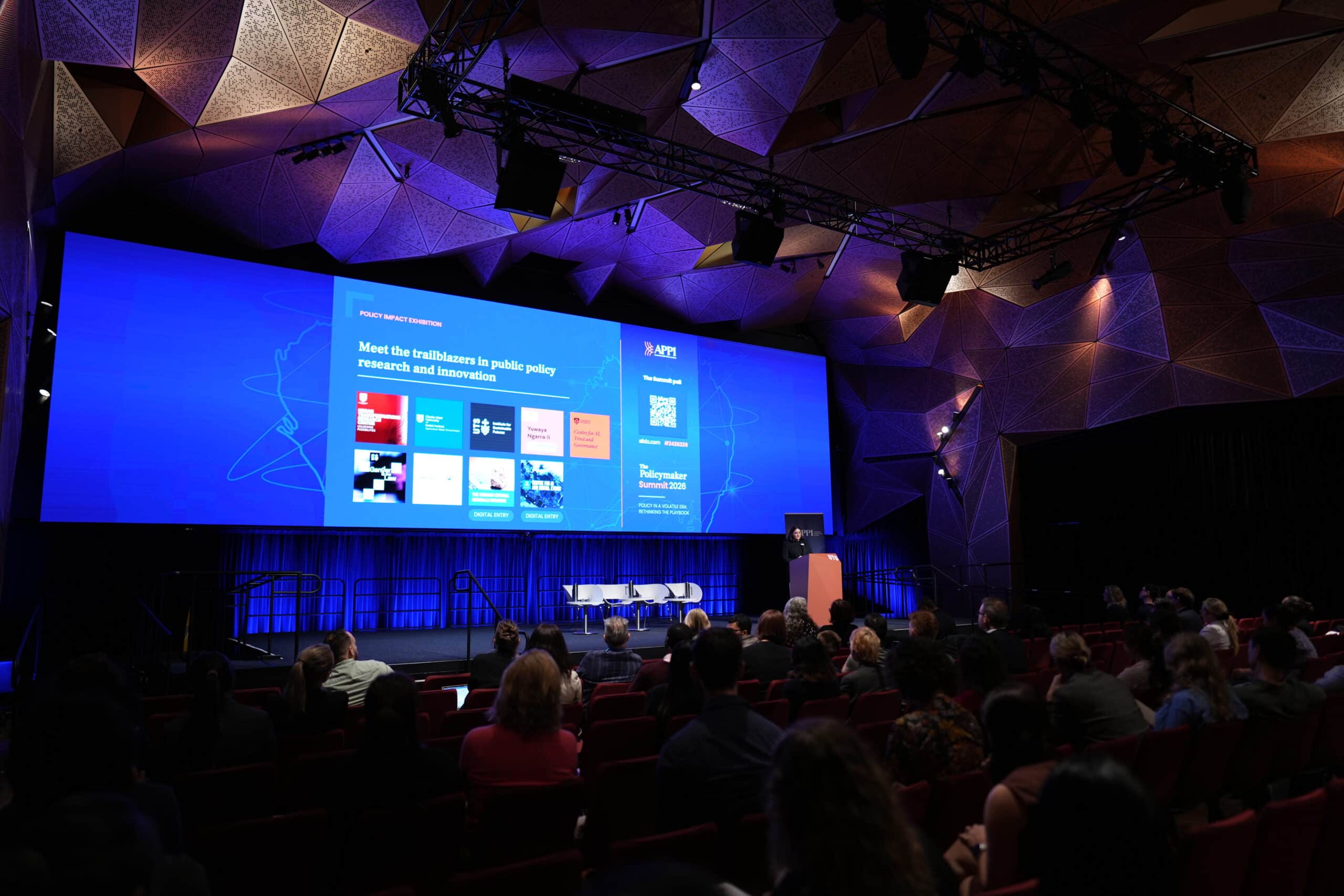
Policymakers, researchers and community leaders came together at the University of Technology Sydney on 30 September for the Australian Public Policy Institute’s Policymaker Summit 2026, exploring how governments can deliver lasting reform while remaining agile in an era of rapid change.
Held under the theme Policy in a volatile era: rethinking the playbook, APPI’s fourth annual summit brought together leaders from government, universities and civil society to consider how policy can respond to accelerating economic, social and technological change. The event also marked APPI’s fifth anniversary and reflected the Institute’s growing national partnership, which now connects the Australian and New South Wales governments with eight universities.
Following a Welcome to Country from Uncle Craig Madden of the Metropolitan Local Aboriginal Land Council, APPI acting CEO and Executive Director Anthony Dursi said the policy challenges facing governments were becoming more complex, intractable and polarised than ever.
Evidence, expertise and partnership
Opening the Summit, UTS Vice-Chancellor and President Professor Andrew Parfitt described universities as part of the civic infrastructure needed to navigate disruption and sustained transformation. The challenges facing Australia, from productivity and housing affordability to artificial intelligence, the energy transition and gender-based violence, do not sit neatly within one institution or discipline.

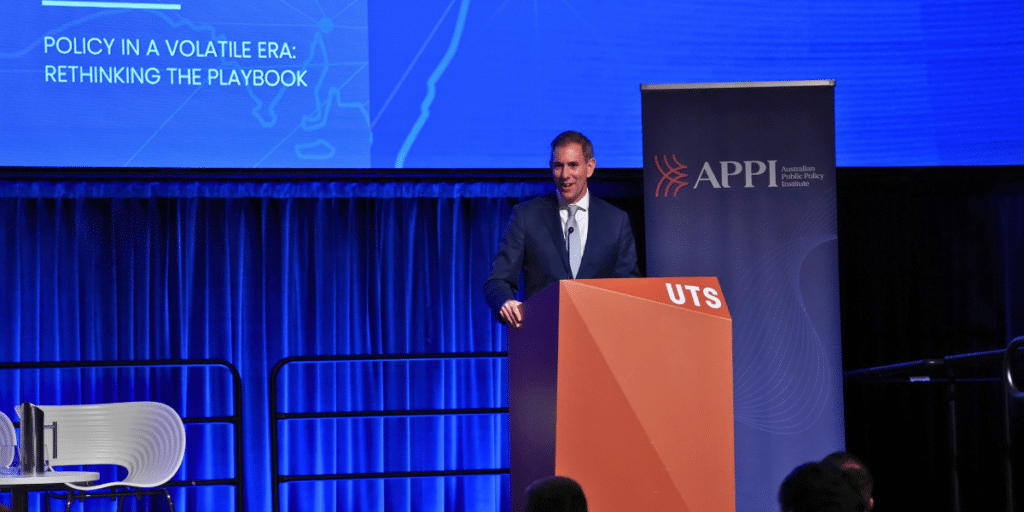
Professor Andrew Parfitt during his opening remarks at the Policymaker Summit 2026.
We need to make sure that knowledge reaches the people making the decisions and that it is translated into timely, actionable, practical insights for government.
Professor Andrew Parfitt, Vice-Chancellor and President of UTS
APPI Deputy Chair and UTS Pro Vice-Chancellor (Social Justice and Inclusion) Amy Persson said stronger connections between government, evidence and expertise were essential to making good policy in a volatile era. Drawing on her experience in the NSW public service, she acknowledged that the systems and incentives of government and universities do not always align, and that each side does not always understand how the other works.
“APPI is changing this,” she said. “Its role in brokering the connections and engagement across these communities is fundamental to the future of both public policy development in this country and the future of the university sector and our ability to have impact.”
Reform cannot wait for calm
In his keynote address, Treasurer of Australia the Hon Dr Jim Chalmers MP placed the Summit’s theme in the context of an increasingly unsettled global economy. He pointed to conflict, higher borrowing costs, competition for capital and accelerating shifts in technology, energy, demography, industry and geopolitics as forces reshaping the policy environment.
Australia entered this period with important advantages, including comparatively low public debt, low unemployment, strong institutions and an attractive investment environment. But those strengths did not reduce the need for difficult reform. Rather, they increased the opportunity and responsibility to act.
The old playbook says that you wait for calm and then you try and make major change. There is no point waiting for calm that might never come.
The Hon Dr Jim Chalmers MP, Treasurer of Australia
Volatility, the Treasurer argued, is increasingly the new normal. That makes reform more important, not less, and places a premium on evidence, consultation and the willingness to pursue necessary change even when conditions are difficult.

The Hon Dr Jim Chalmers MP delivers his keynote.
Keeping human intelligence at the centre
NSW Deputy Premier and Minister for Education and Early Learning, the Hon Prue Car MP, used her keynote to examine the implications of screen use and artificial intelligence for education. In a world increasingly shaped by AI, schools must continue to value and develop human cognition, concentration and critical thinking.
The Deputy Premier outlined the evidence and reasoning behind new screen-time limits in NSW public schools, including more offline learning, greater use of pen and paper and clearer boundaries around technology in the classroom. The aim was to ensure technology supports rather than displaces the sustained effort and human relationships on which learning depends.
In a world of artificial intelligence, I’d argue it’s never been more important to value and insist on human intelligence.
The Hon Prue Car MP, NSW Deputy Premier and Minister for Education and Early Learning

The Hon Prue Car MP during her keynote.
Building policy that can adapt
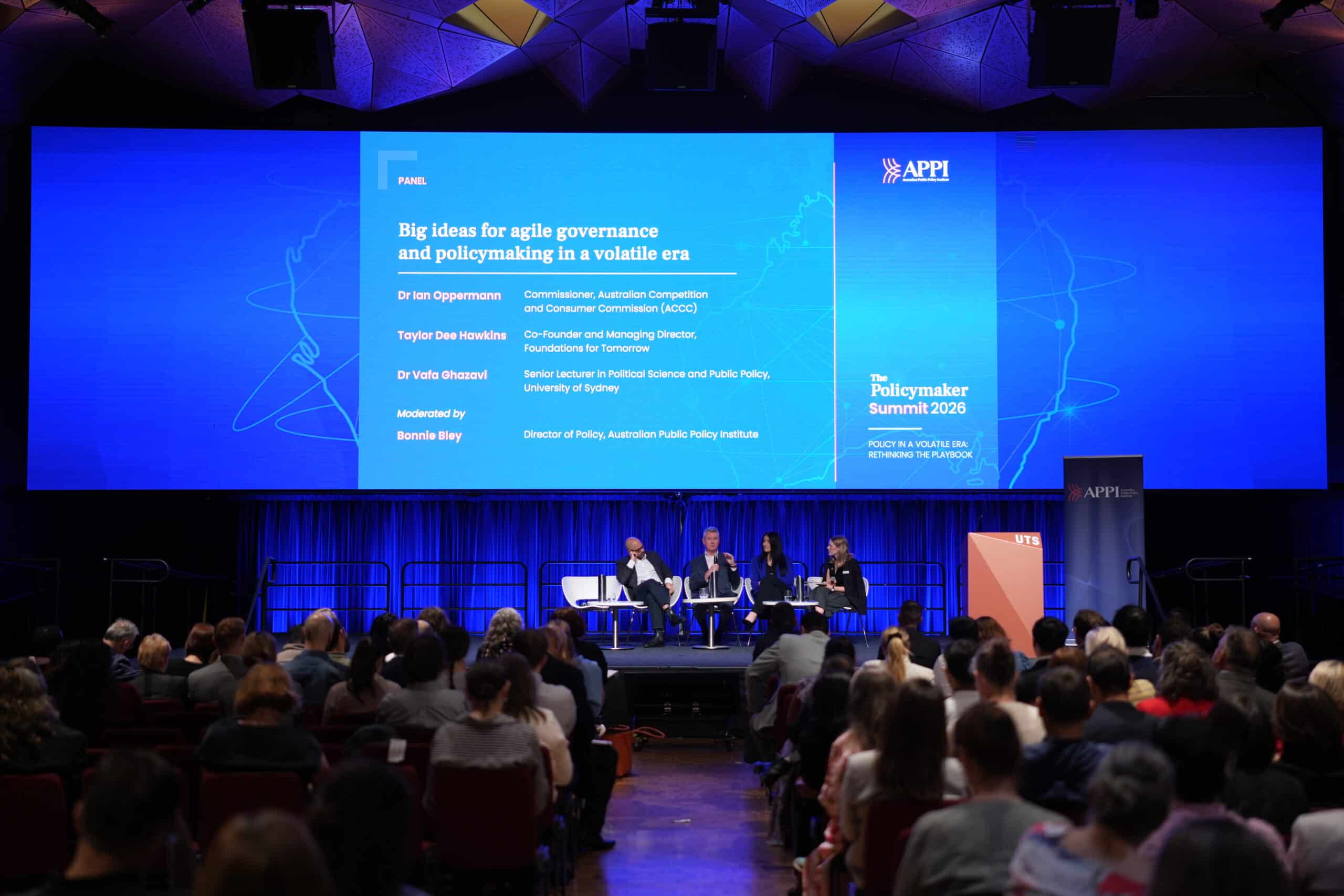
A panel on agile governance moved from principles to practice. Moderated by APPI Director of Policy Bonnie Bley, the discussion brought together ACCC Commissioner and former NSW Chief Data Scientist Dr Ian Oppermann, Foundations for Tomorrow Co-Founder and Managing Director Taylor Hawkins and University of Sydney Senior Lecturer Dr Vafa Ghazavi.
The panellists highlighted several parts of a stronger policy playbook: using foresight to consider multiple possible futures; starting with a clear picture of the outcomes government wants to achieve; designing principles that endure while operational frameworks evolve; and giving communities a genuine role in shaping place-based responses.
Dr Oppermann illustrated adaptive governance through the NSW AI Assurance Framework: enduring principles were retained while practical guidance was updated as generative AI and international standards evolved. Hawkins turned to the culture of public institutions, arguing that public servants need the psychological safety to test ideas, learn and admit when something is not working. Dr Ghazavi described place-based policy as a “quiet revolution” that recasts government as a partner, drawing on the knowledge of communities and frontline staff rather than imposing uniform solutions from the centre. “This really flips the script,” Dr Ghazavi said. “It makes government a humble player that puts people and communities back in charge.”
The discussion emphasised that adaptive policy depends on being open about uncertainty. Strong systems should surface mistakes early, incorporate feedback and create space for policy to change without losing sight of its purpose.
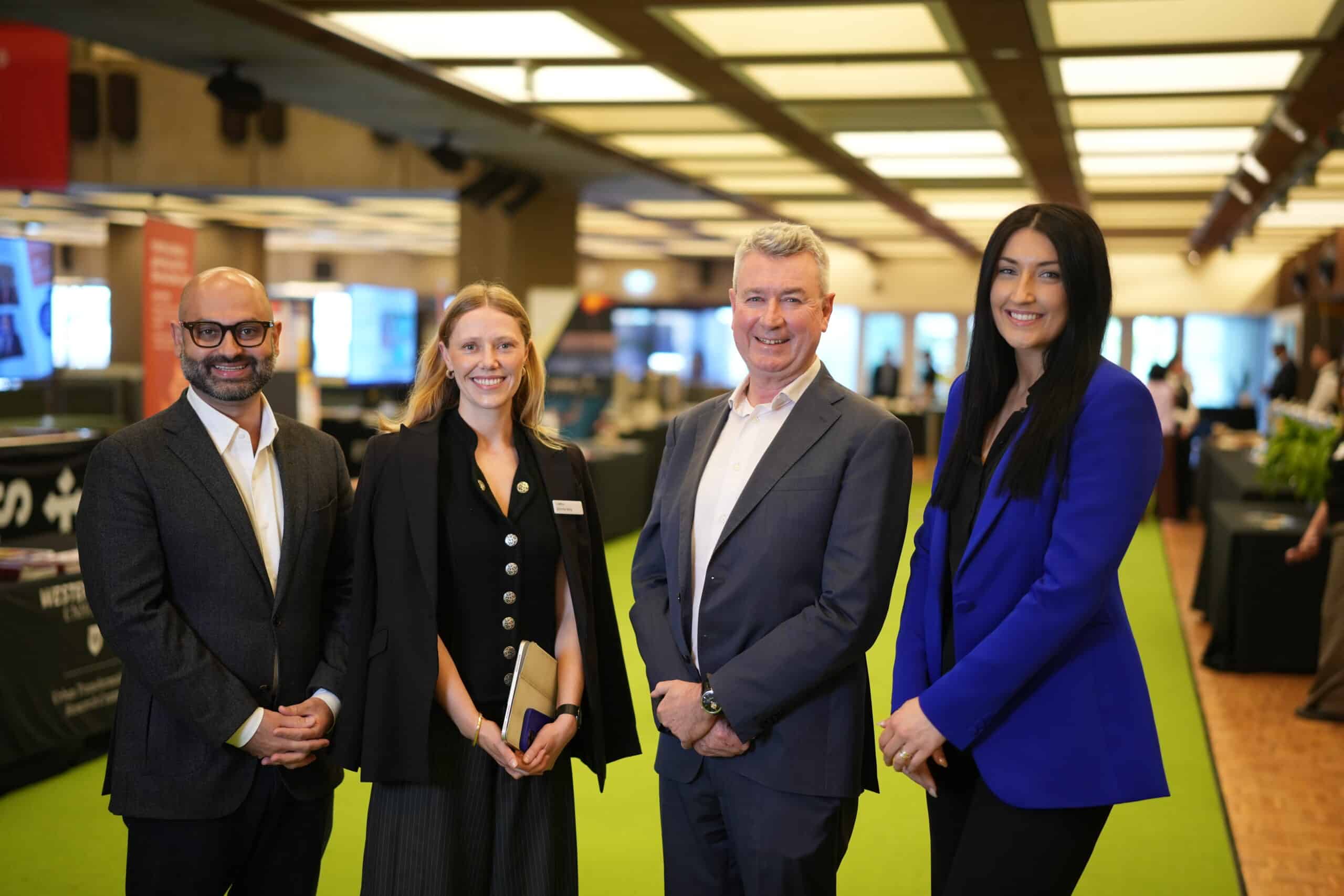
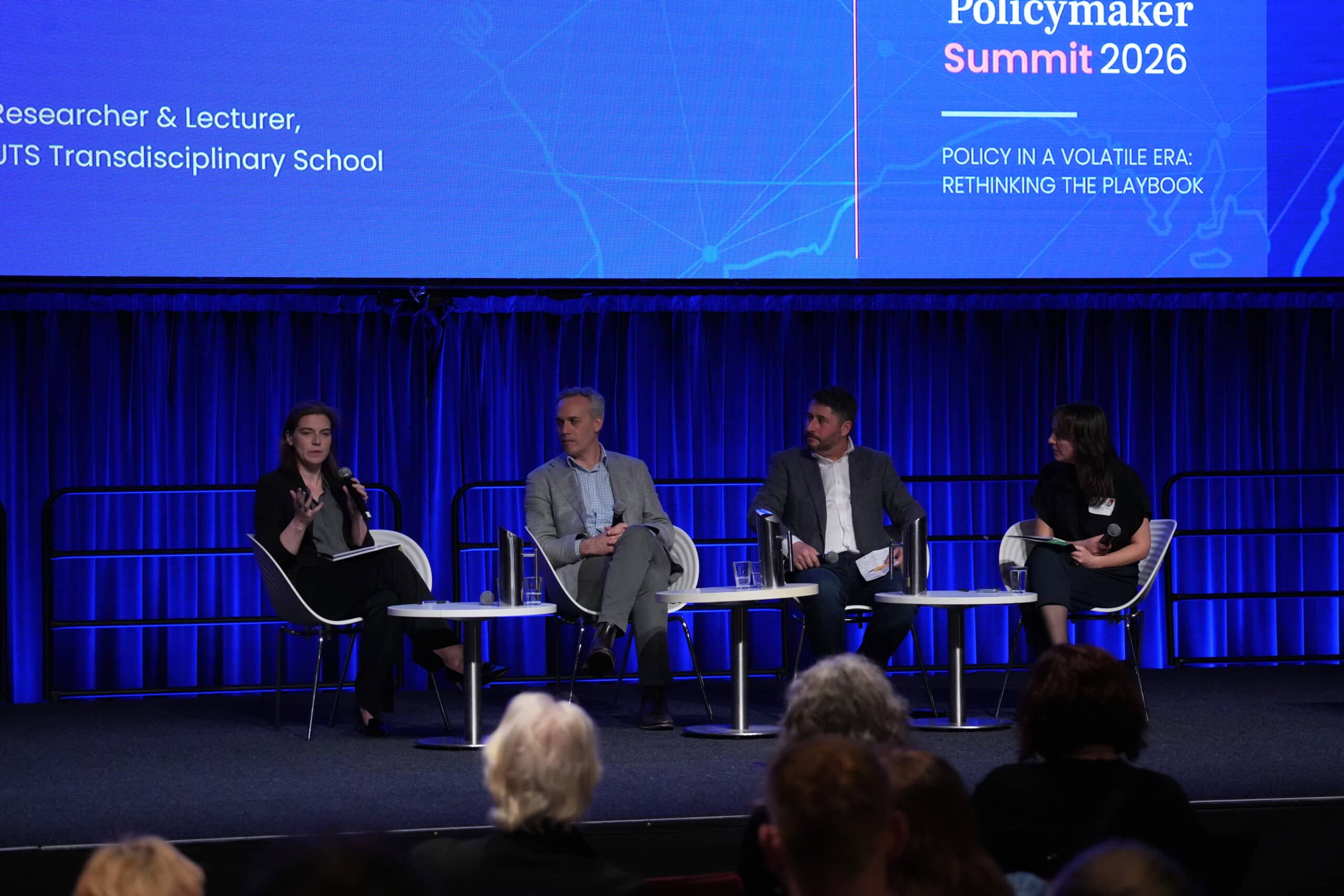
Panel 1, from left to right: Dr Vafa Ghazavi, Bonnie Bley, Dr Ian Oppermann and Taylor Hawkins.
Putting young people at the centre
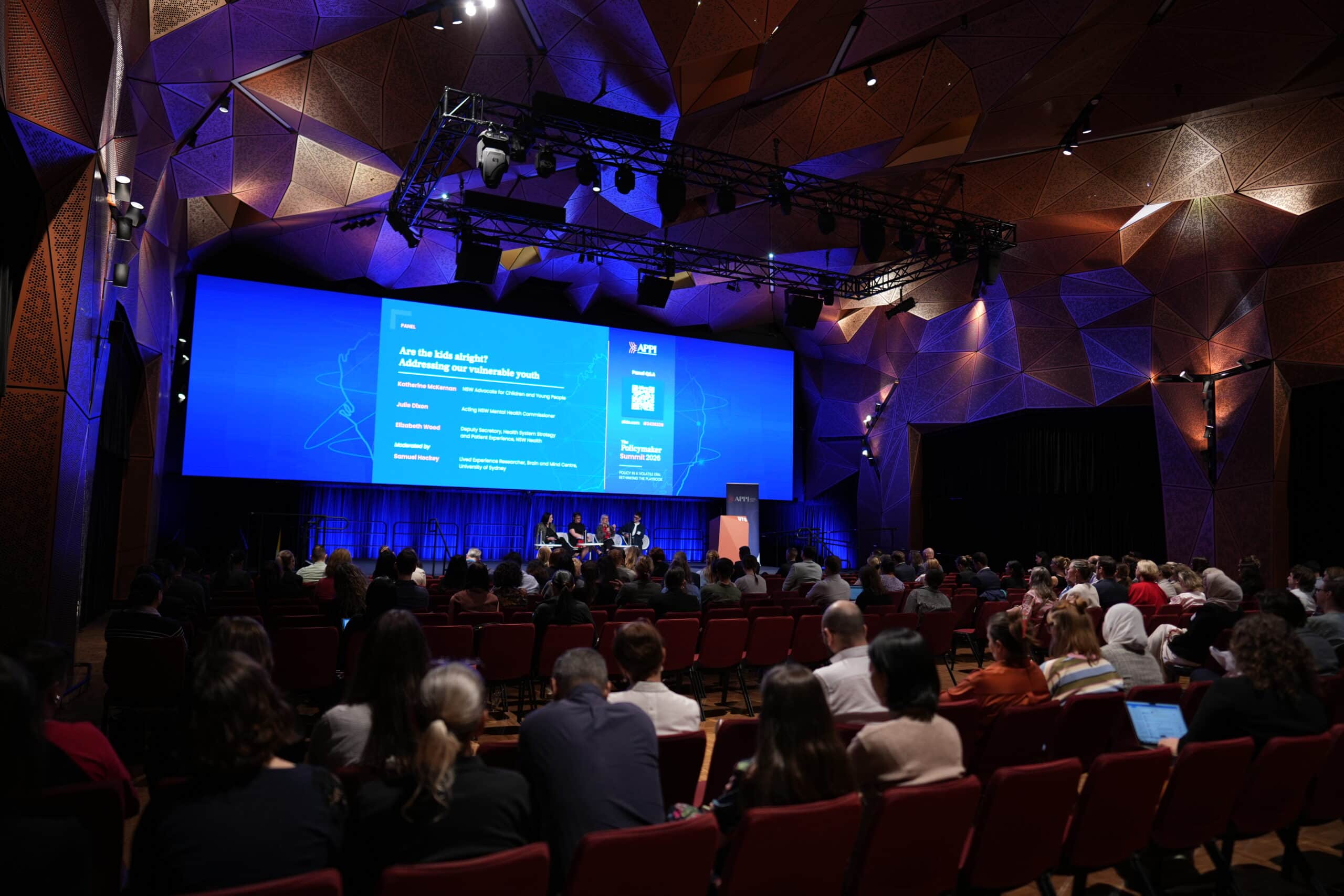
The Summit’s second panel asked whether policy systems are keeping pace with the pressures facing young people. Moderated by lived experience researcher Samuel Hockey from the University of Sydney, the conversation brought together NSW Advocate for Children and Young People Katherine McKernan, NSW Health Deputy Secretary Elizabeth Wood and Acting NSW Mental Health Commissioner Julie Dixon.
Panellists cautioned against treating youth anxiety and distress as health issues alone. Cost-of-living pressures, housing insecurity, social isolation, online harms and broader uncertainty all shape wellbeing. At the same time, young people bring strengths that deficit-focused debates can miss: they are often more willing to identify when they are struggling, to seek support from peers and trusted adults and to contribute ideas about the systems that affect them.
The gap appears when help is needed. Services must be accessible, timely and affordable, with a “no wrong door” approach that connects young people to support wherever they enter the system. Schools, families, community organisations, sport, arts and peer networks all have a role to play, alongside clinical services.
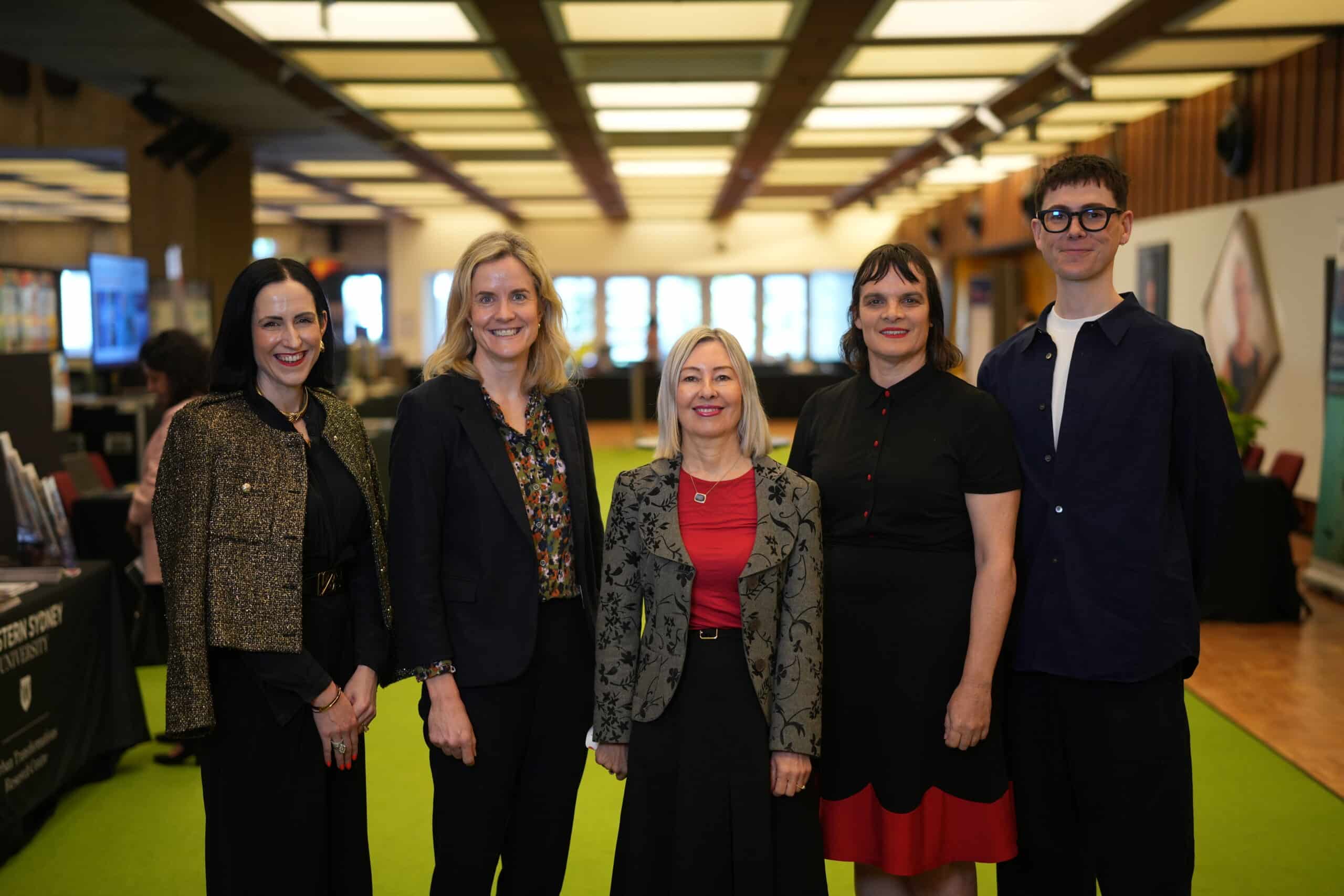
Panel 2, from left to right: Elizabeth Wood, Marianna Brungs, Julie Dixon, Katherine McKernan and Samuel Hockey.
The discussion also explored the opportunities and risks of online life. Young people report widespread exposure to harmful content, but online spaces can also provide connection and safety, particularly for people who may be isolated by geography or circumstance. The answer, the panel argued, is not a single restriction or program, but a combination of platform accountability, digital literacy, accessible reporting mechanisms and meaningful engagement with young people themselves.
“It’s important not just to be listened to,” McKernan said. Young people also want to know how their views influenced decisions and, when their advice cannot be adopted, to be told why.
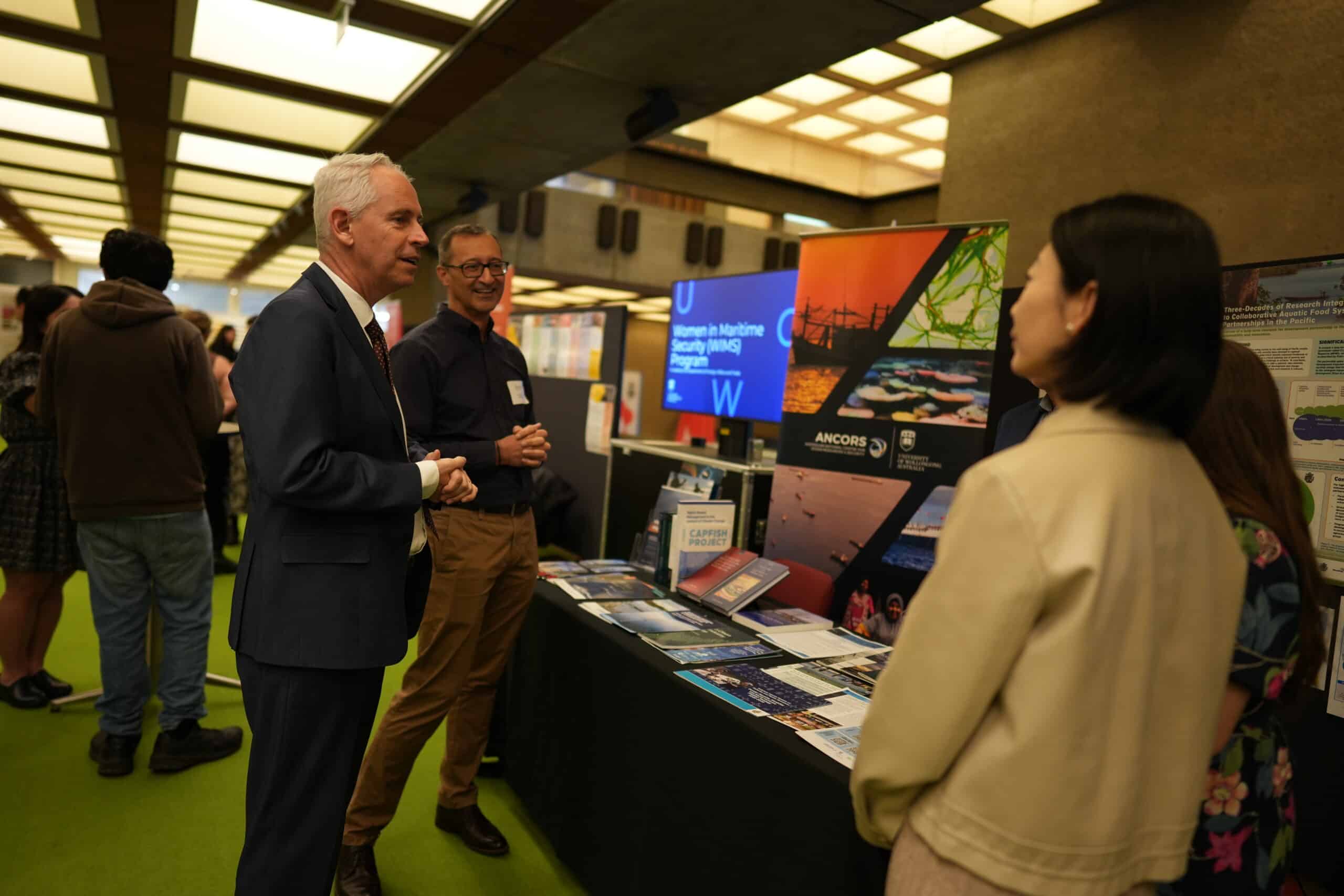
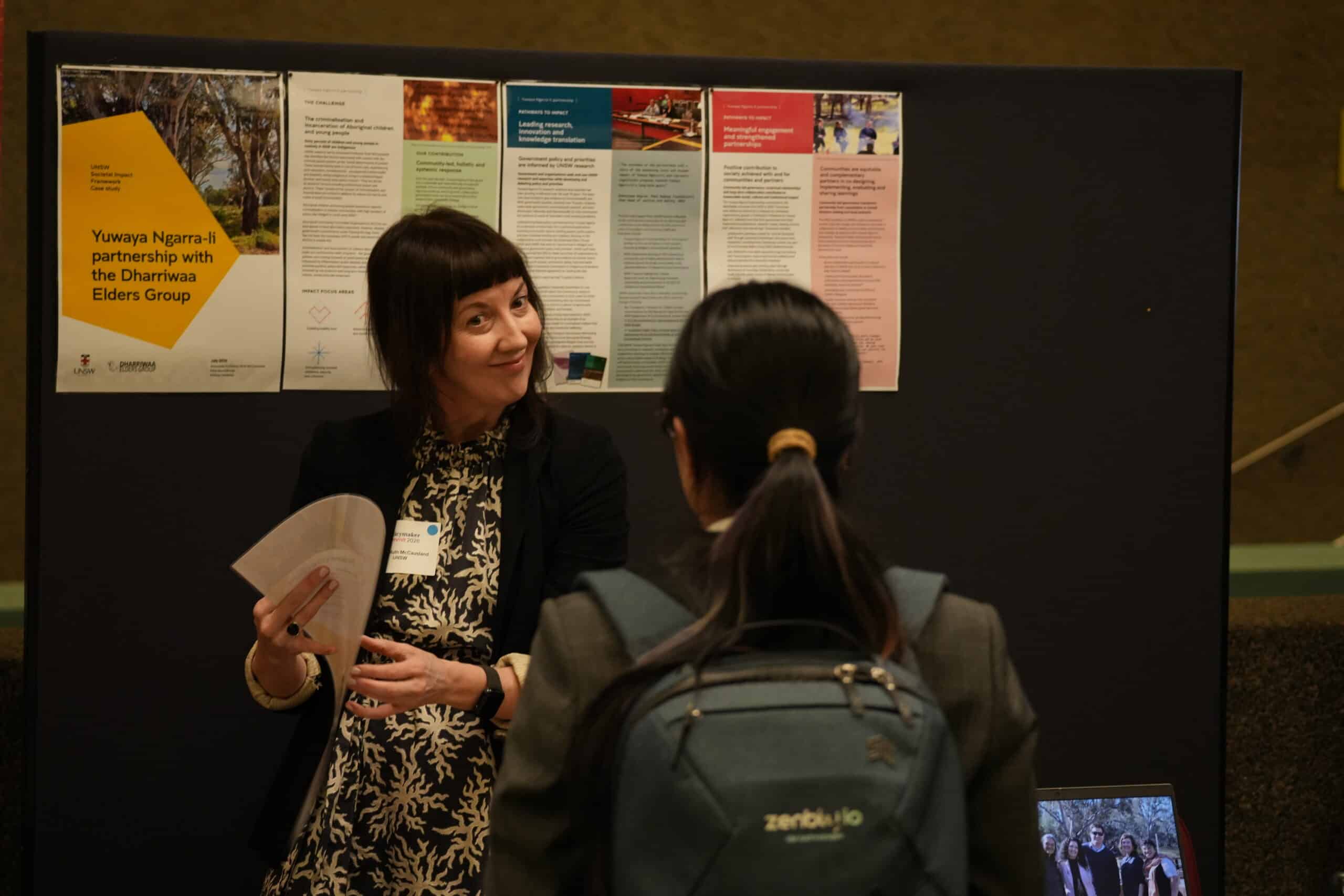
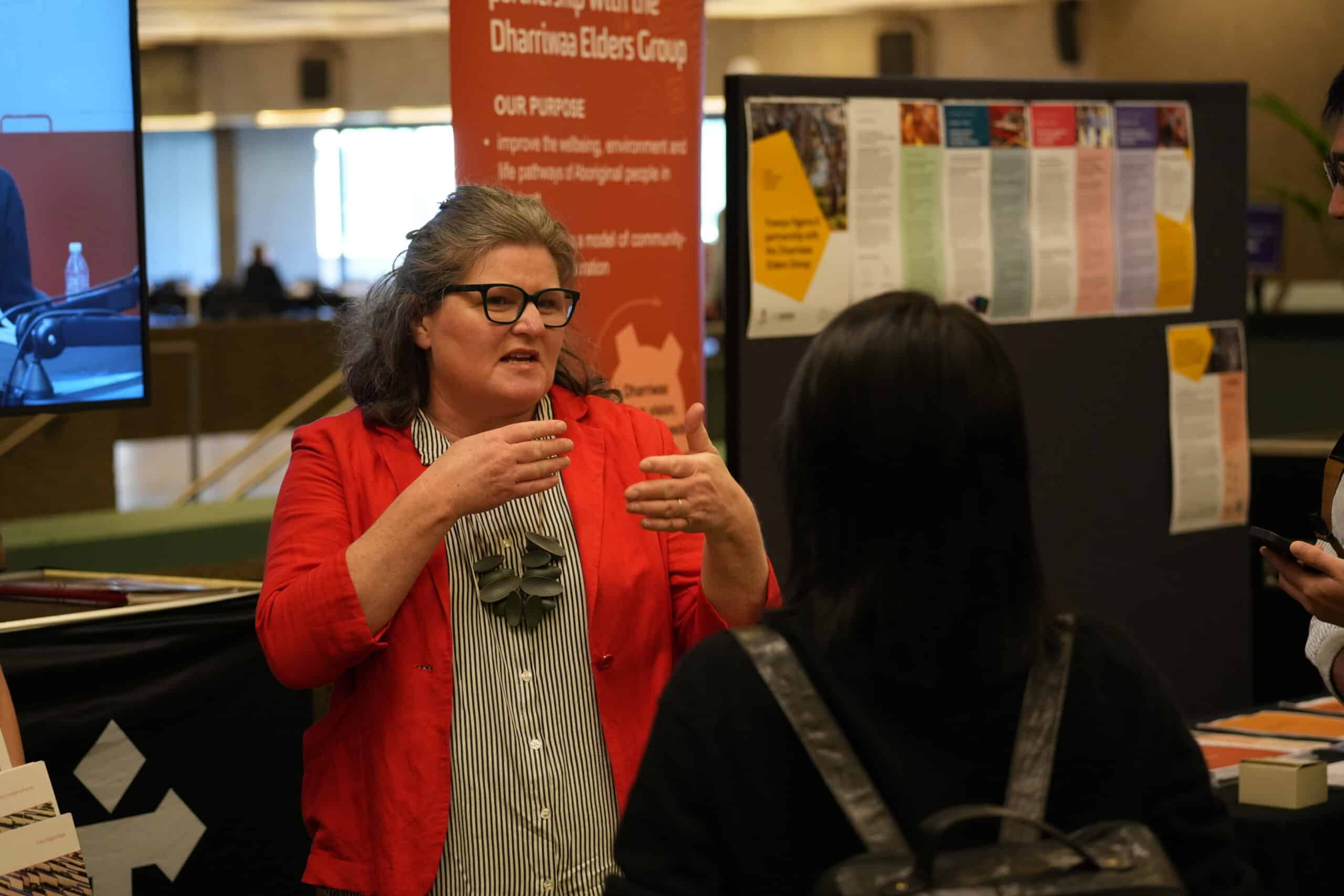
During the Policy Impact Exhibition, research centres from across APPI’s university network showcased work with practical relevance to government, spanning fields from AI governance and sustainability to Indigenous empowerment and urban development. Among the exhibitors was UTS Professor Ramona Vijeyarasa, whose research examines how law can better advance gender equality, including through a new global dataset for assessing legislation’s impact on women. The exhibition gave policymakers and researchers a chance to discuss the projects and their potential applications.
Exhibitors included the Centre for AI, Trust and Governance – The University of Sydney, ANCORS Australian National Centre for Ocean Resources and Security – University of Wollongong, Yuwaya Ngarra-li & Dharriwaa Elders Group – UNSW, Gender & the law – UTS, Institute for Sustainable Futures (ISF) – UTS, Gulbali Institute – Charles Sturt University, Urban Transformations Research Centre (UTRC) – Western Sydney University, Centre for Artificial Intelligence and Digital Ethics (CAIDE) – The University of Melbourne, and Critical Minerals Initiative – Monash University.
Setting standards for responsible AI
The Summit’s artificial intelligence panel examined how governments can harness AI while maintaining public trust and clear lines of accountability. The discussion brought together Emma Byrne, Director of the Office of AI in the NSW Cabinet Office; Trevor Gauld, Deputy Commissioner Jobs & Skills Australia; Professor Ed Santow, Director of Policy and Governance at UTS’s Human Technology Institute; and Dr Bronwyn Cumbo from the UTS Transdisciplinary School.
Referring to the Prime Minister’s speech outlining Australia’s approach to AI, Professor Ed Santow said the country had an opportunity to shift from responding to standards set elsewhere to helping shape them.
Australia has been kind of like a cork bobbing in an ocean. If we’ve been moved by waves, those waves have been created by others.
Professor Ed Santow, UTS
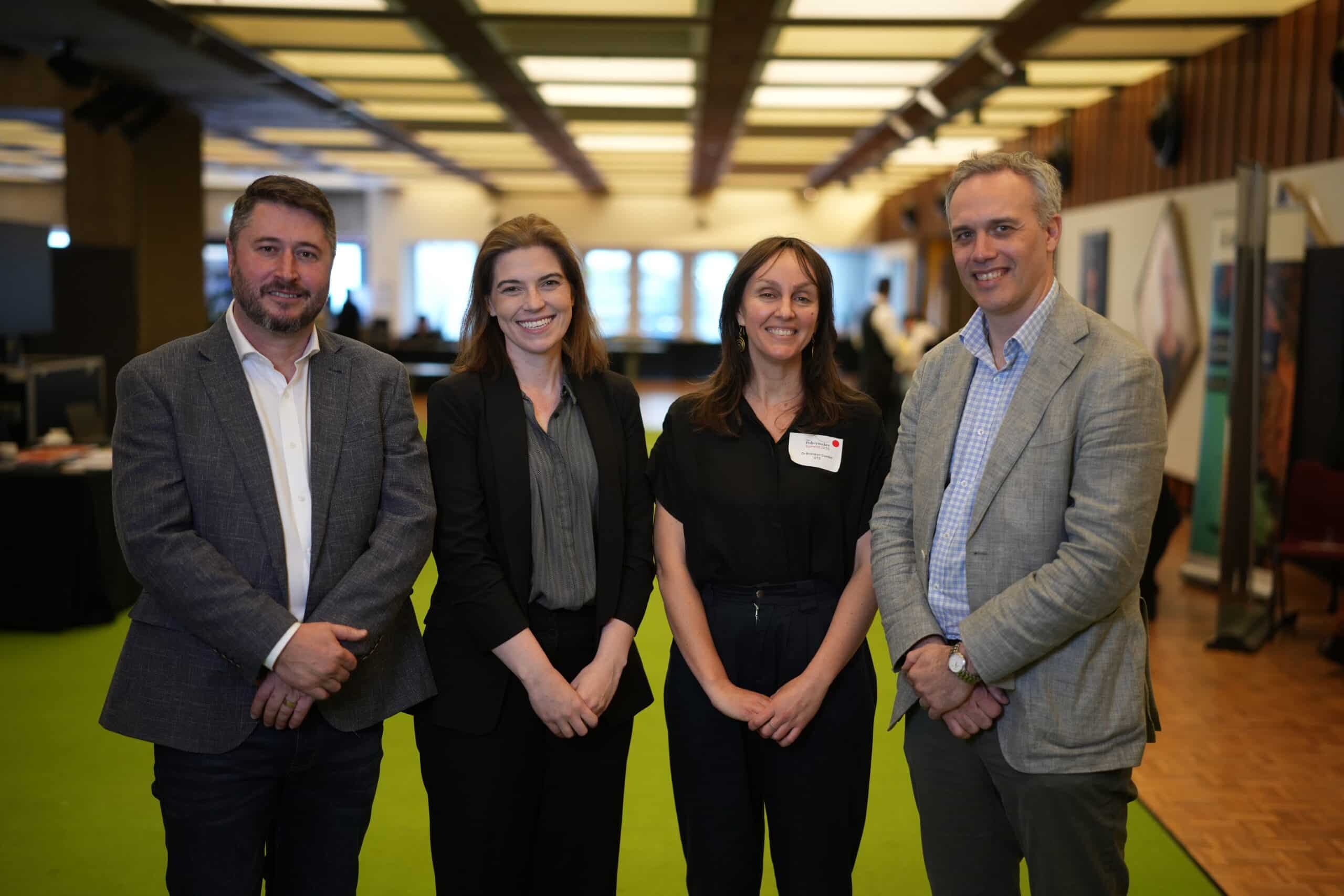
Panel 3, from left to right: Trevor Gauld, Emma Byrne, Dr Bronwyn Cumbo and Professor Ed Santow.
Panellists explored how high-level principles could be translated into standards that guide how governments develop and use AI, backed by assurance processes that can evolve as new risks emerge. Drawing on Jobs and Skills Australia’s research, Trevor Gauld said AI would affect workplaces unevenly, with digital exclusion, employer capability and job design shaping the transition. The outcomes were not inevitable but would depend on the choices made about adoption and how its benefits are shared.
That focus on how the benefits are shared carried into the panel’s discussion of participation. Panellists argued that people affected by AI-enabled systems should help shape their design and use, bringing experience that technical assessments can overlook. This would help governments pursue innovation while maintaining safeguards.
Rebuilding trust through institutions that deliver
Delivering the third ministerial keynote, the Hon Andrew Giles MP, Minister for Skills and Training, argued that rebuilding public trust depends on institutions delivering tangible improvements in people’s lives. He pointed to the skills and training system as one way government can help people navigate change with greater confidence.
Trust is built through institutions that work and which are seen to work, to serve the public good and to make people’s everyday lives better.
The Hon Andrew Giles MP, Minister for Skills and Training

The Hon Andrew Giles MP delivers his keynote.
Across the day, speakers explored how governments can pursue reform amid constant disruption: holding to clear principles while adapting how policy is delivered, using evidence without losing sight of lived experience and ensuring new technologies serve the public good. The Summit offered a snapshot of a debate that will continue to evolve. APPI will take the ideas and questions raised into its work with government and university partners over the year ahead.
We thank our government and university partners, speakers, moderators, exhibitors and everyone who joined us and contributed to the event’s success.